Cameron Walter · 22 September 2026
Bryophyte Settlement Patterns in Abandoned Industrial Sites: Mapping Microhabitat Preferences Across Concrete Surfaces and Metal Structures
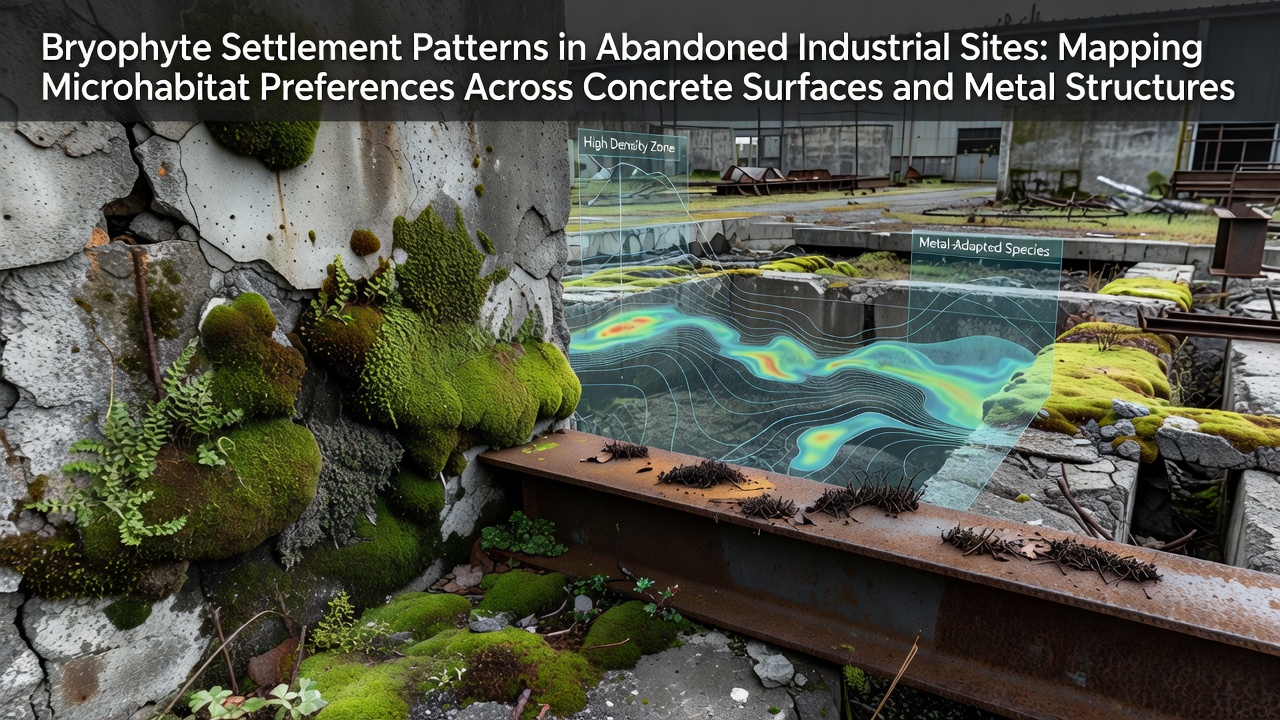
Abandoned industrial sites present distinct challenges and opportunities for bryophyte colonization, where mosses, liverworts, and hornworts establish on surfaces that range from weathered concrete to corroded steel frameworks, and researchers have documented settlement patterns that reflect specific microhabitat conditions including moisture retention, pH levels, and surface texture. Studies conducted across multiple regions show that bryophytes respond to variations in light exposure, wind patterns, and chemical residues left from prior industrial activity, which in turn shape community composition and distribution across these post-industrial landscapes.
Concrete Surface Dynamics
Concrete foundations and walls in disused factories often retain pockets of fine sediment and organic debris that trap water long enough for spore germination, while the alkaline nature of the material favors species such as Tortula muralis and Grimmia pulvinata that tolerate elevated pH values, and field surveys indicate higher bryophyte cover on horizontal surfaces compared with vertical ones because gravity-assisted water pooling creates sustained hydration zones. Observers note that cracks and expansion joints serve as primary entry points where bryophyte mats expand outward, and data collected from sites in former manufacturing districts reveal that concrete aged between fifteen and forty years supports denser populations than fresher or more heavily degraded sections.
Metal Structure Preferences
Metal beams, pipes, and machinery housings introduce different settlement variables because rust layers create micro-roughness that anchors rhizoids, yet rapid temperature fluctuations and low water-holding capacity limit growth to sheltered crevices or areas shaded by overhead structures, and researchers mapping these patterns report that species like Ceratodon purpureus appear more frequently on ferrous surfaces where iron oxides buffer local acidity. Mapping efforts using grid-based sampling have shown that metal surfaces oriented northward or eastward accumulate bryophyte cover at higher rates in temperate zones due to reduced direct solar heating, while southern exposures remain largely bare except in locations where adjacent concrete provides runoff moisture.
Mapping Techniques and Data Collection
Researchers employ a combination of drone imagery, handheld spectrometers, and quadrat sampling to record bryophyte distribution at scales from individual rivets to entire building envelopes, and these methods allow quantification of cover percentages alongside measurements of substrate temperature, relative humidity, and heavy-metal concentrations. Geographic information systems integrate the resulting layers so that preference models can predict where new colonization is likely after site disturbance, and recent protocols developed by multi-institution teams emphasize repeated seasonal visits to capture shifts driven by rainfall variability.
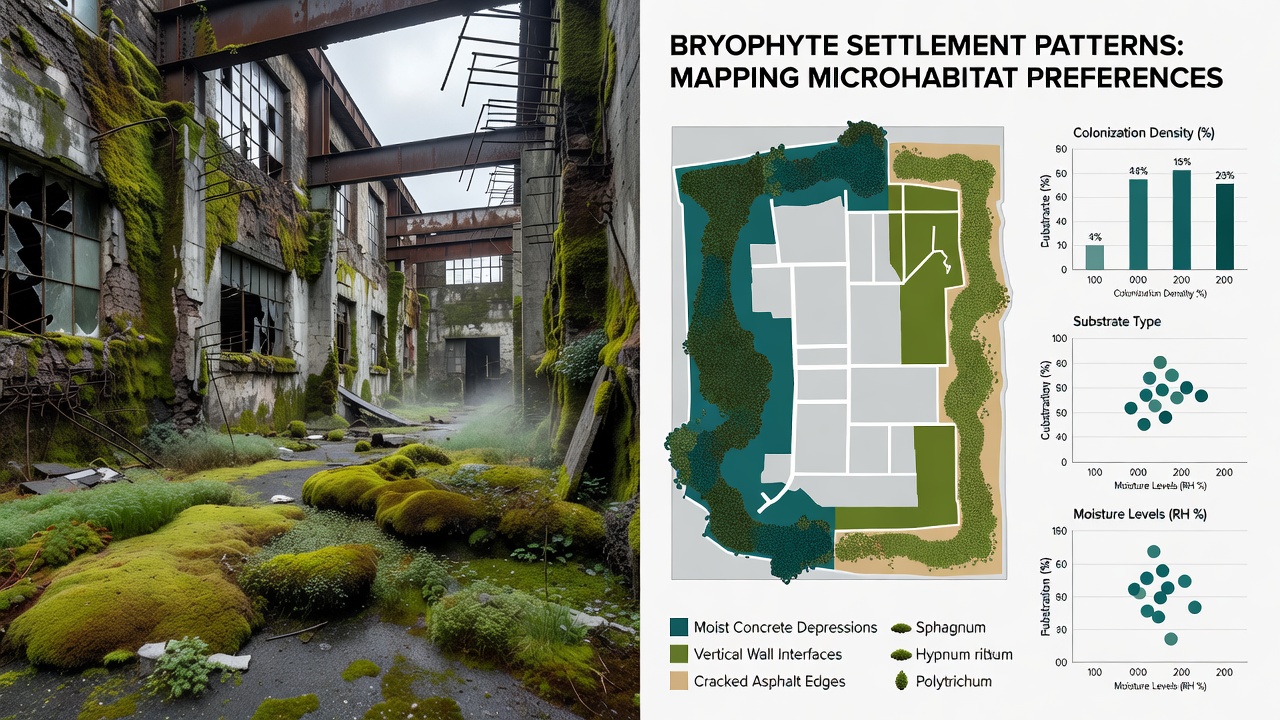
One study released in September 2026 compiled results from twenty-three abandoned sites across three continents and found that concrete surfaces hosted an average of 38 percent bryophyte cover while adjacent metal structures averaged 22 percent, with the difference attributed primarily to differences in water retention rather than metal toxicity alone. The same dataset indicated that sites decommissioned before 1990 exhibited greater species richness, suggesting cumulative effects of long-term weathering and seed bank accumulation over decades.
Regional Case Examples
In the Great Lakes region, teams documented extensive mats of Funaria hygrometrica on concrete loading docks where coal dust residues increased surface darkness and heat absorption, while similar docks in coastal European locations showed dominance by Schistidium apocarpum on metal railings that retained salt spray from nearby marine air. Australian researchers tracking sites in former mining districts reported that bryophyte establishment on metal surfaces accelerated after the installation of shade cloth during remediation trials, demonstrating that microclimate modification can override substrate limitations.
According to findings published by the U.S. Environmental Protection Agency, bryophyte communities on industrial concrete contribute measurable reductions in particulate resuspension during dry periods, and parallel work from Environment and Climate Change Canada has quantified similar stabilization effects on metal surfaces in northern climates. These observations feed into broader models of ecological recovery that treat bryophytes as early indicators of habitat suitability for later successional plants.
Conclusion
Settlement patterns of bryophytes across abandoned industrial concrete and metal surfaces arise from interactions among substrate chemistry, microtopography, and local climate, and the mapping approaches developed to date provide replicable frameworks for tracking colonization over time. Continued monitoring through 2026 and beyond will refine predictive tools that support both conservation planning and safe site redevelopment, as the presence of established bryophyte communities signals conditions under which further natural regeneration becomes feasible.